

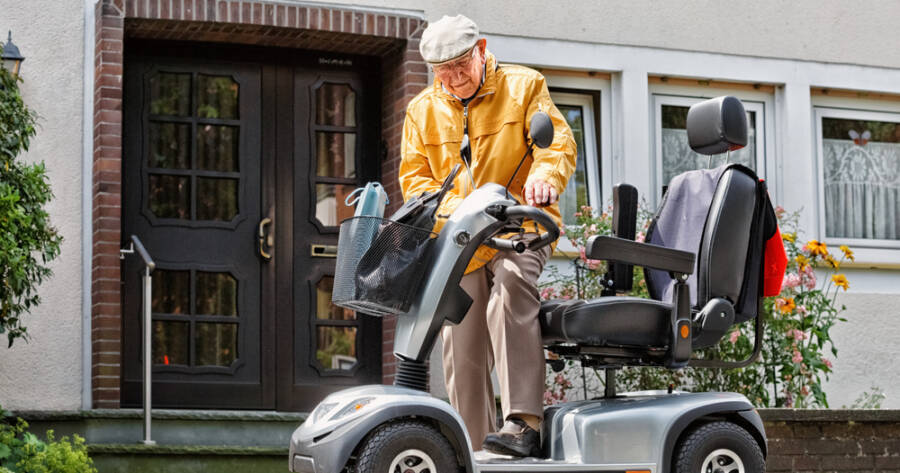
When getting around the home becomes difficult, a mobility scooter can start to feel less like a convenience and more like an essential part of daily life. For Medicare beneficiaries, however, coverage isn’t as simple as choosing a scooter and submitting the bill. Several requirements determine whether Medicare will help with the cost and how the process unfolds.
How Medicare Classifies Mobility Scooters
Medicare Part B treats power-operated vehicles, including mobility scooters, as Durable Medical Equipment (DME) (source). This classification is important because it places scooters alongside other medically necessary equipment that Part B is designed to support. Rather than being viewed as a convenience or lifestyle product, a mobility scooter must be positioned as a medical necessity to qualify for any level of coverage.
This distinction matters greatly when navigating the approval process. Medicare does not automatically cover every scooter purchase. Coverage is only extended when the equipment serves a legitimate medical purpose that cannot be addressed through simpler mobility aids (source).
Who Qualifies for Medicare Scooter Coverage
Eligibility for Medicare scooter coverage hinges on demonstrating that a person cannot adequately meet their mobility needs at home using a cane, walker, or manual wheelchair (source). The emphasis on in-home mobility is significant. Medicare evaluates whether the equipment is necessary for a beneficiary to move around within their own living environment, not just for outdoor or recreational use.
Individuals who struggle with balance, have significant weakness in their upper body, or face other physical limitations that prevent safe use of manual mobility devices are typically the population this coverage is designed to serve. A treating physician or qualified healthcare provider must formally certify that the scooter is medically necessary before any coverage can be approved (source).
The Role of the Doctor and the Supplier
Before Medicare will approve coverage for a mobility scooter, two important conditions must be satisfied. First, the patient must undergo a face-to-face examination with a treating provider, who will then issue a written prescription documenting the medical need for the equipment (source). This step is non-negotiable — skipping or bypassing the face-to-face evaluation disqualifies the request.
Second, both the prescribing doctor and the DME supplier providing the scooter must be actively enrolled in Medicare (source). If either party is not enrolled, Medicare will not cover the cost, regardless of the medical need. Beneficiaries should verify enrollment status with both their provider and their chosen supplier before moving forward with any purchase or rental arrangement.
Understanding Cost-Sharing Under Part B
Medicare does not cover the full cost of a qualifying mobility scooter. Once a beneficiary has met the annual Part B deductible, Medicare typically covers 80% of the Medicare-approved amount for the equipment, leaving the beneficiary responsible for the remaining 20%, provided the supplier accepts assignment (source). Suppliers who accept assignment agree to charge no more than the Medicare-approved rate, which helps protect beneficiaries from unexpected out-of-pocket costs.
For those with supplemental insurance or a Medigap policy, that remaining 20% may be partially or fully offset depending on the specific plan. Understanding how multiple coverage layers interact can significantly reduce what a beneficiary ultimately pays for their scooter.
Prior Authorization and What to Expect
Certain types of power wheelchairs and scooters may require prior authorization before Medicare will commit to covering the cost (source). Prior authorization is essentially a pre-approval process where Medicare reviews the medical documentation before the equipment is ordered or delivered. This step can add time to the process, so planning ahead and gathering thorough documentation from a treating provider is advisable.
Delays or denials often stem from incomplete paperwork rather than ineligibility itself. Ensuring that medical records, physician notes, and the written prescription clearly support the necessity of the scooter gives the application the strongest possible foundation. Beneficiaries who are denied coverage do have the right to appeal the decision through Medicare’s formal appeals process.
Why You Should Learn More About Medicare Mobility Scooter Coverage Today
Mobility scooters can restore independence and significantly improve quality of life for individuals who struggle with limited movement at home. Medicare Part B provides a pathway to partial coverage for those who meet the medical eligibility requirements, work with enrolled providers and suppliers, and complete the necessary documentation steps. The cost-sharing structure means that qualifying beneficiaries are not left to shoulder the entire financial burden on their own.
For anyone exploring mobility solutions, understanding how Medicare’s DME coverage works, including the face-to-face examination requirement, the role of enrolled suppliers, and the possibility of prior authorization, can make the difference between an informed decision and a costly misunderstanding. Taking time to understand these details is a worthwhile step for any Medicare beneficiary facing mobility challenges.